

- prevention
- 6 mins
Summer Stories and Snacks
July 2nd
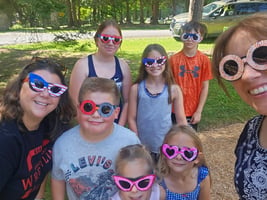 Pete the Cat and His Magic Sunglasses follows a grouchy Pete the Cat who receives magic sunglasses from Grumpy Toad. These magic glasses help him see the good in everything, and he shares them with friends like Squirrel, Turtle, and Alligator to brighten their days. After the glasses break, he learns he didn't need them all along and that he could find positivity all on his own. We chose this book to show children that the “magic” comes from within and even after things break you can find the good in every day on your own.
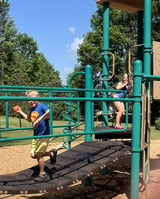
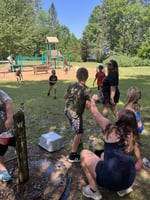
We made our own magic sunglasses and then did some fun games and relays with water balloons.
July 9th
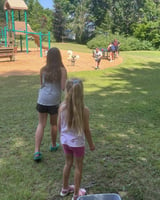
The Big Cheese is a book in the Food Group series about a boastful cheese who learns humility after being defeated by a quiet newcomer named Wedge in the annual Cheese-cathlon. We chose this book to learn lessons about competition, pride, humility and the importance of learning to lose gracefully.
After the story we enjoyed a delicious charcuterie board with meats and cheeses and made cardboard cheese wedge cars. We used our cars to compete and see whose could travel the furthest. There were some great examples of winning with humility and losing gracefully when one of our smallest competitors easily beat the older kids.
July 16th
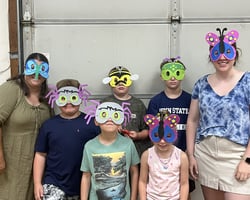 Freddie and Friends: Bugging Out is a book about learning to match reactions to the size of a problem, featuring Freddie the Fly and Stella the Stinkbug, who learns to stop overreacting to small issues. We chose this book to teach children to keep small problems small and not “bug out” over everything.
We made bug masks and played a bingo game that presented scenarios with different sized problems, from simple "no bigs" to complicated "huge deals". We talked about the scenarios and figured out which ones are problems we can solve on our own and which ones are problems we need to ask an adult to help solve. We then played Duck, Duck, Goose but with a bug-themed twist (Buzz, Buzz, Sting).
July 23rd
We had initially planned to do Pig the Winner but switched to Awesome Dawson: It's Not Your Turn because of the group size. Awesome Dawson: It’s Not Your Turn is a story that follows a young boy named Dawson who loves being first and having everything his way. Whenever someone else gets the spotlight or he has to wait in line, he throws epic tantrums. Dawson eventually gets some tools and learns some tricks to make waiting easier. We chose this book to help children learn patience, emotional control, and how to appropriately handle the disappointment of not going first like Dawson.
In the story, Dawson learns to take his frustration out on a little squishy that he can fidget with while he waits. So, everyone got their own little mochi squishies to use when they're feeling frustrated. After a quick snack, we played a game of drawing telephone. Trying to figure out what the group is drawing while you're waiting for your turn is a fun exercise in patience.
July 30th
Where’s Rex? is a story about friendship and teamwork. A pair of dinosaurs set out on an adventurous quest to find their missing friend Rex, who gets stuck in the muck. They work together with all their dino-friends to try and help Rex.
We chose this book to emphasize friendship, teamwork, and problem-solving. Our guest reader, Sarah, the Sullivan County Library Director, did an excellent job taking us through the book. Afterwards, the group had a discussion on how we should get help if we have a problem we can't solve on our own. Like the dinosaurs in the book, we should listen to everyone's ideas until we come up with the best solution. Problems are easier to solve when we work together!
After our discussion, we excavated some dino eggs and practiced our teamwork in a life-size version of Dinosaur Escape. We had to work together to try and find the tiles with the right dinosaur in the right habitat so that the dinosaurs could escape before the volcano erupted.
Additional Programs
Trehab
Trehab invited us to speak to their LAUNCH Summer Program about cyberbullying and digital citizenship. We started by discussing cyberbullying, which is repeated, aggressive behavior intended to intimidate, hurt, or harass another person using technology. If a student finds themselves the target of cyberbullying, we encouraged them to ACT: Ask for help from trusted adults, Collect evidence and report, and Take care of yourself.
We also talked about ways students can ensure that they don't unintentionally cyberbully someone or cross digital boundaries.
Sometimes cyberbullying happens because people choose to act online in ways that don't align with their real-life values. They might forget that there are real people on the other side of the screen or that what they post could go viral and be seen by the wrong person.
We also explored the important, but sometimes overlooked responsibility of managing your digital footprint, or the information about you that is collected when you use technology. Your digital footprint is active (the things you choose to share) and passive (the information websites collect about your online activity) and combined can create a portrait of who you are.
Your digital footprint can be an asset when it represents who you are and what's important to you. Some people have used their digital footprint to their advantage to build a positive reputation. However, your digital footprint can be harmful when it exposes your personal information or paints a picture of you that is unrealistic or undesirable. Some people have lost job opportunities, college admissions, and relationships because of their posts.
Our final discussion, focused on practical ways to control what information is collected and how we can stay safer when we're online. By remaining accountable to your values and beliefs, both offline and online, you can ensure your digital footprint is a positive and accurate representation of who you are.
Eagles Mere Conservancy
During our visit to the Conservancy, we read The Thank You Letter by Jane Cabrera and explored the importance of gratitude. Through the story, participants learned that taking time to recognize and appreciate the people, places, and things that make our lives better can help strengthen relationships and improve our overall well-being.
After reading, participants went on a gratitude scavenger hunt, searching for things in nature and their surroundings that brought them joy, comfort, or appreciation. The activity encouraged participants to slow down, observe the world around them, and recognize the many positive things that are often overlooked in our daily lives.
To conclude the program, students put their gratitude into action by writing thank-you letters. The letters will be displayed in the Conservancy cabin as a reminder of the power of gratitude and the positive impact that kind words can have on others.
Independent Living
During our first IL meeting this month, we talked about gratitude and the positive impact it can have on our relationships, outlook, and overall well-being. Participants reflected on the people and experiences they are thankful for. After our discussion, we played a game of Spoons. The fast-paced game encouraged participants to practice focus, communication, and good sportsmanship while having fun together.
At our second meeting, we enjoyed an afternoon of mini golf. The activity gave participants an opportunity to socialize, build connections, and practice patience and perseverance. Whether celebrating a hole-in-one or laughing off a missed shot, everyone had the chance to support one another and enjoy friendly competition. Activities like mini golf help participants build confidence, strengthen relationships, and develop important social skills in a fun and relaxed environment.